


The Defence Of Western Europe
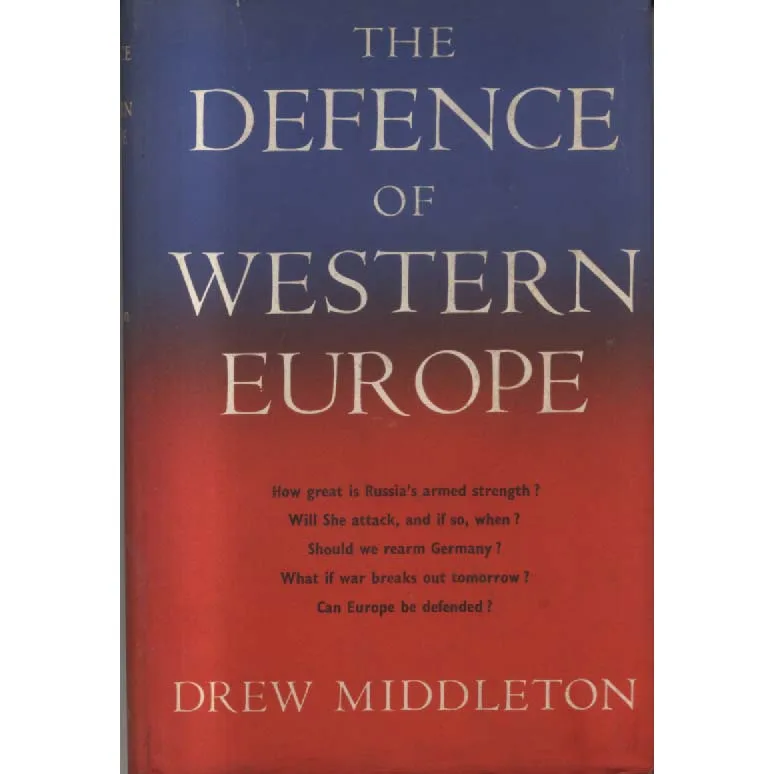
Publisher: Frederick Muller
Format: Hardback
ISBN: none
The Defence of Western Europe (1952)
By Drew Middleton | Frederick Muller
ISBN: none (too early in the Cold War for barcodes)
Condition: Good (calm, serious, slightly worried)
Offered by: Crappy Old Books
Travel back to that soothing historical moment when everyone was absolutely certain World War II had just finished… and equally certain the next one might start any minute.
The Defence of Western Europe (1952) is Drew Middleton’s clear-eyed look at how, exactly, the West planned not to be steamrollered if things got exciting on the wrong side of the Iron Curtain. Think early NATO anxiety, maps with arrows pointing ominously west, and very serious men talking about divisions, supply lines and “the balance of power”.
What’s going on inside?
Expect:
-
A post-war, pre-relaxed overview of Western Europe’s military posture: who has troops where, who has tanks, and who is quietly hoping diplomacy works out.
-
Cold War analysis before it became a well-worn subject: this is written when the Cold War is brand new and terrifying, not a GCSE topic.
-
Lots of talk about:
-
NATO
-
Strategy and deterrence
-
What might happen if the Soviets push west
-
How prepared (or not) everyone actually is
-
It’s the kind of book where phrases like “Soviet capabilities”, “air superiority” and “forward defence” turn up quite a bit, and nobody has yet invented the phrase “geopolitical think-piece”.
Tone and style
Middleton was a proper war correspondent / serious journalist, so:
-
The prose is measured, factual, and sober, not hysterical or tub-thumping.
-
There’s a sense of: “Here are the facts, and I hope you’re suitably disturbed.”
-
It’s filled with the calm, worried energy of someone who has actually seen what happens when strategy fails and would prefer not to repeat it.
No flashy rhetoric, no modern pundit snark – just solid mid-century realism about how shaky peace can be.
This particular copy
-
Condition: Good – not a wreck, not a relic in velvet gloves. Just… good.
-
Binding: sound, no pages staging an escape.
-
Boards: generally presentable, with the usual light bumps or rubbing that say “I’ve been alive since 1952, what’s your excuse?”
-
Pages: all there, reasonably clean, perfectly readable.
-
Not “mint”. Not “fine”. Just honestly well-kept for its age, which is really all you can ask of a Cold War hardback and most people.
Why you might actually want this
-
You’re interested in the early Cold War, but you’re tired of history books written with the benefit of hindsight. This one is written while it’s happening, with none of the “we now know…” smugness.
-
You like reading strategic analysis from a time when:
-
Nuclear weapons were new and horrifying
-
Europe was still rebuilding
-
And nobody was remotely sure how any of this would end
-
-
You enjoy maps, zones, alliances and occasionally thinking: “Blimey, that was a close-run thing.”
It’s not a thriller, but it has the quiet tension of one, because everybody involved is very politely worried about World War III.
The vibe
Open it and you’re in:
-
Offices with large wall maps.
-
Men in suits pointing at central Europe with pencils.
-
A world where Germany is a strategic problem, not a stag weekend location.
No internet, no email leaks, no think-tank Twitter threads. Just carefully argued chapters about how to stop Western Europe becoming a battlefield again.
Not just for military buffs
Yes, it’s defence policy and strategy, but it’s also:
-
A snapshot of what the West thought about itself in 1952: its strengths, its fears, its assumptions.
-
A companion piece to any general Cold War history – this gives you the flavour of how things felt up close, not forty years later.
-
Weirdly comforting, in a “we’ve always been one bad decision away from disaster” kind of way.
Ideal for:
-
Cold War nerds, NATO enthusiasts and map addicts.
-
People who enjoy serious non-fiction written in clear English without bullet-pointed “key takeaways”.
-
Anyone who’s ever looked at modern news and thought, “Surely this was all simpler in the 1950s?” (Spoiler: it wasn’t.)
-
Readers who appreciate the mild absurdity of buying The Defence of Western Europe—a sober, strategic survey—from somewhere called Crappy Old Books.
Supplied by Crappy Old Books, where the topics are grave, the condition is Good, and the continent is—just about—still defended.
Keep browsing: See more War books Other books by Drew Middleton
